|
|
Naguabo
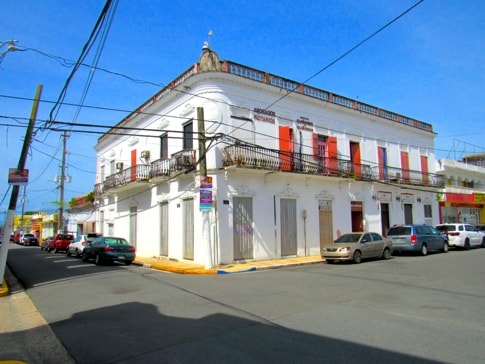
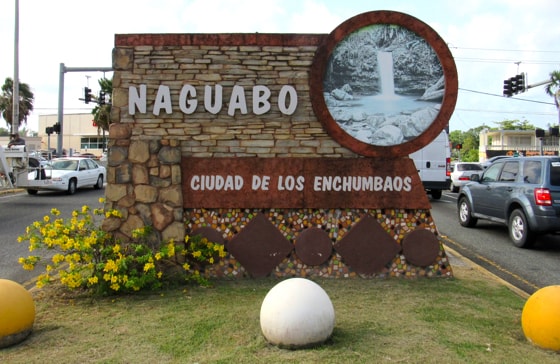
A moderately sized town on the East of Puerto Rico, Naguabo fits on the coast between Ceiba to its North and Humacao to its South. Known as "El Pueblo de los Enchumbaos" (The Town of the Drenched Ones) because of the number of rivers and streams it has, and the high volume of rain it receives from lying below the southern slopes of El Yunque Rainforest.
In the earliest days of Spanish colonization, attempts were made to settle in the area. In 1511 Juan Ponce de Leon built a fort in Daguao, but this was destroyed by attacks of Caribes from Vieques. In 1513 another attempt was made to construct a fortified settlement at the mouth of the Daguao River, but this was also abandoned under the constant attacks of Tainos and Caribes. Initial attempts to establish haciendas to raise cattle and farm the land suffered similar fates.
The lack of population made the area ideal as a centre for smuggling operations of the Dutch, French and English who were colonizing other parts of the Caribbean. Spanish colonial authorities encouraged the creation of settlements in the East of the island to counteract this illegal trade, but this took time to develop.
The town of Naguabo a was originally formed in 1794, once more in the area of Daguao, but the inhabitants petitioned for it to be moved to the less hilly area at its current location. This was approved and the town officially became a municipality in 1821.
|
|
Welcome to Naguabo.
|
A year after its founding, Naguabo was the centre of an attempted revolt to create the Puerto Rican Republic. Led by Pierre Bignet and Pierre Dubois, an emissary of Simón Bolívar, and supported by others in the town, they managed to provoke the slaves in Daguao to revolt. However, this uprising was quickly suppressed by Spanish authorities.
Despite its unsettled beginnings, Naguabo managed to survive and grow as a town. During its early development, the economy of Naguabo was based principally on mining and sugar cane, along with cattle farming for meat and dairy production. As a coastal town, Naguabo also had fishing and is renowned for, and is said to be the birthplace of, the pastelillo de chapín, which is a popular food in Puerto Rico. This is a deep-fried empanada/turnover pastry dish, filled with chapín (trunkfish). Pastelillos de chapín can be found in many of the restaurants in Naguabo, especially in El Malecon, the waterfront area.
Mining and sugar cane have declined or disappeared, but Naguabo still has cattle farming and other agriculture and has developed light industry. Along with El Malecon and it beaches, which attract outside visitors, it continues to remain a viable town.
|
The parish church of Nuestra Señora del Rosario
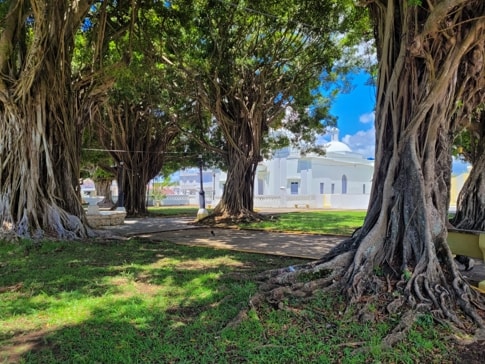
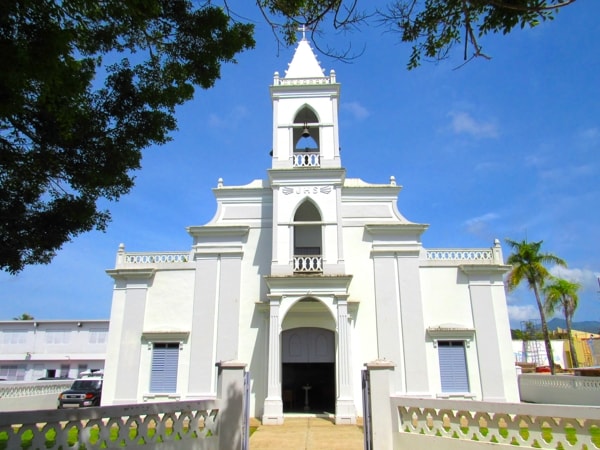
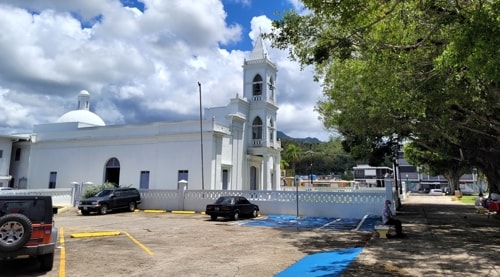
Located within, and occupying a large part of, the plaza de recreo, Nuestra Señora del Rosario (Our Lady or the Rosary) is the parish church of Naguabo. While the church lies on an East-West axis, it's placement on the western side of the plaza with its entrance facing into the plaza means it is not oriented as traditionally seen in Puerto Rican churches.
|
|
Nuestra Señora del Rosario
|
While the parish was founded much earlier, building of the permanent church structure began in 1841 and was completed in 1856, though soon after that a project to rework the façade by engineer Mariano Bosch in recorded in 1858.
|
|
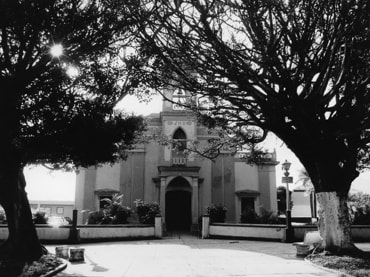
The church in 1984Photo Source: National Register of Historic Places
|
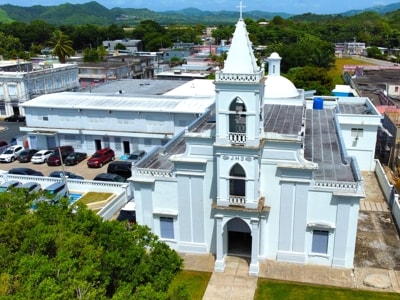
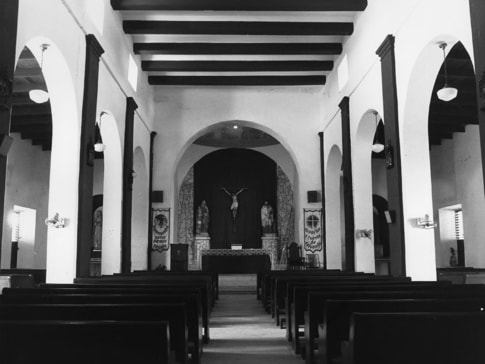
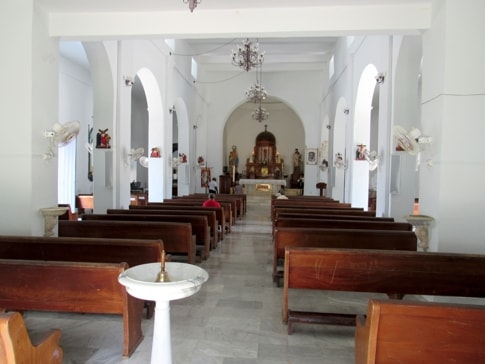
The church consists of a single nave with two side aisles with a square apse covered by a brick lanterned dome. Four square clerestory windows help to provide light to the main part of the church.
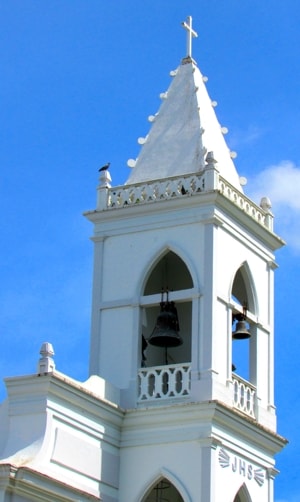
The current building retains most of the original structure though the original wooden roofs over the nave and aisles have been replaced. The square bell tower which dominates the façade was added in 1913 and, at some stage, a parish house was added which completely covers the back of the church.
|
|
View from over the Plaza
|
Inside, the current choir loft is a newer addition, while at the front a low concrete latice wall encloses a garden area with a path to the front entrance.
|
|
The Bell Tower
|
The bell tower is criticised architecturally as it simple stands out in front of the façade with little or no integration. The lowest of the tower's three levels creates a portico leading into the front door. The tower does however lend character to the church's overall design.
|
|
View from the South side
|
Nuestra Señora del Rosario was included as part of a general review of historical churches in Puerto Rico by the Historic Preservation Office in 1984. As a result it was added to the National Register of Historic Places, and some of the photos shown here come from that review.
|
|
Interior view in 1984 Photo Source: National Register of Historic Places
|
|
|
|
|
Interior view now
|
|
|
El Malecon de Naguabo
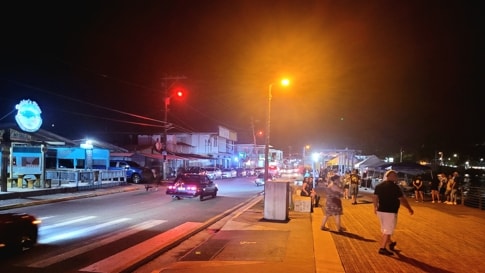
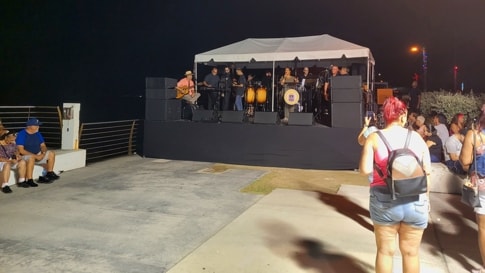
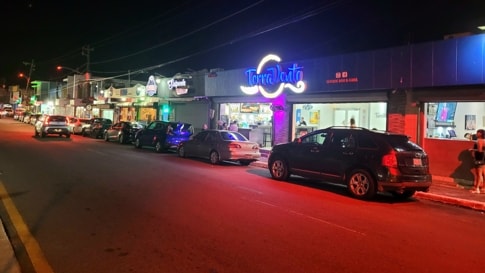
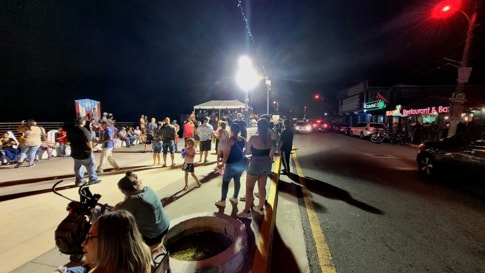
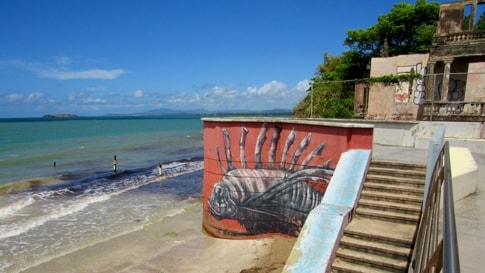
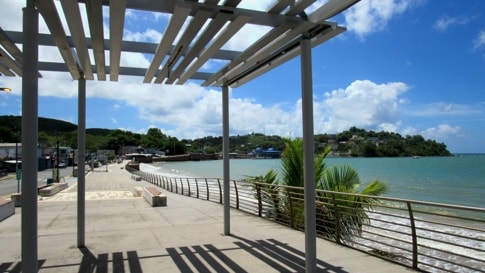
El Malecon (Promenade or Boardwalk), is an attractive waterfront in Naguabo where PR Highway #3 comes down to run alongside the sea. Lined with bars and restaurants on the landward side of the road, a refurbished area on the water's edge provides an area for people to enjoy the view and to gather.
|
|
|
|
Views of El Malecon
|
The scenes above show El Malecon during the 2nd day of the Fiestas en Honor de la Virgen del Carmen (Festivities in Honour of the Virgin of Carmen) with the Mayor, on the stage, welcoming everyone at the start of the evening.
|
The Beaches of Naguabo
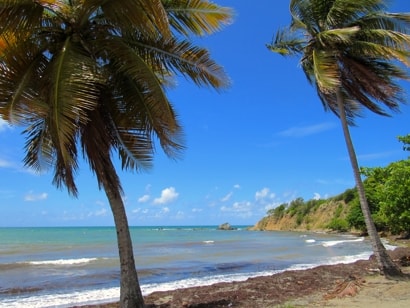
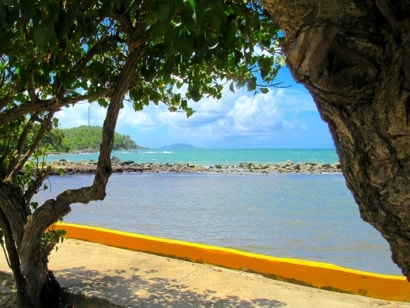
Naguabo's location in the East of Puerto Rico between Ceiba to the North and Humacao to the South, provides it with a coastline boasting a number of beaches.
Playa Tropical
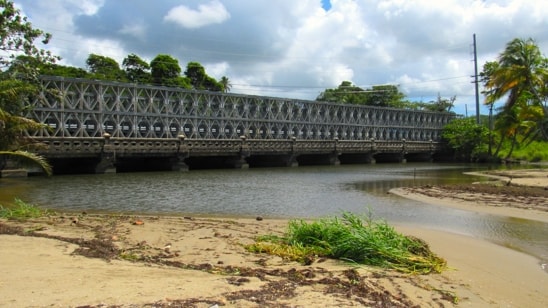
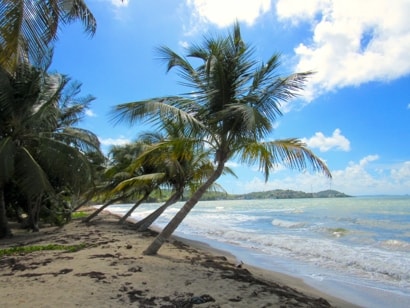
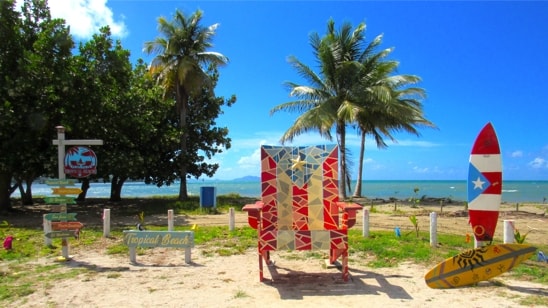
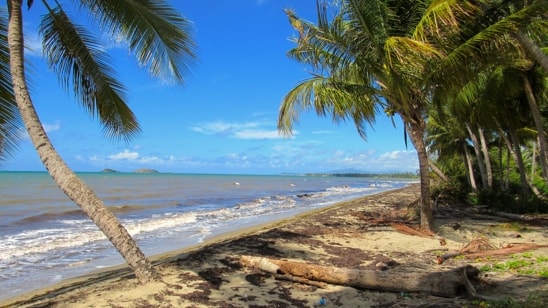
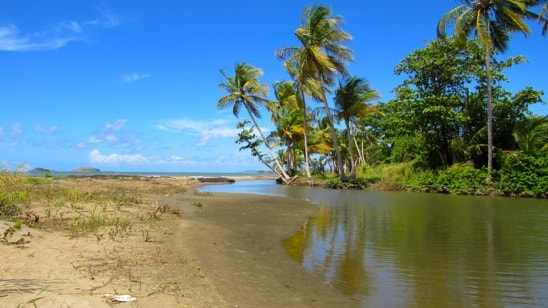
The southernmost of Naguabo's beaches, and its largest, is Tropical Beach, which streches between the mouths of two rivers - Río Santiago and Río Blanco.
|
|
|
|
Río Santiago at Tropical Beach's northern end
|
|
Looking North towards Río Santiago
|
|
|
|
|
|
|
|
|
|
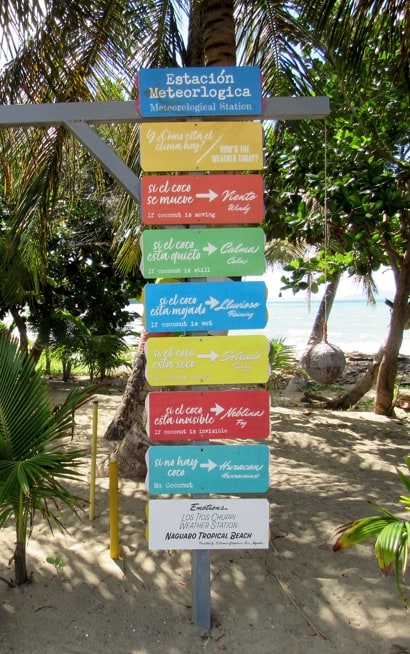
Los Tíos Chuppi Weather Station
|
|
Other scenes along Tropical Beach
|
|
|

|
|
Río Blanco at southern end of the beach
|
|
Tropical Beach
|

|
|
|
|
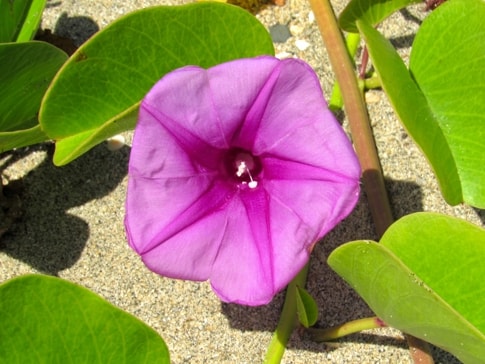
Flowers on Tropical Beach
|
Playa La Fanduca
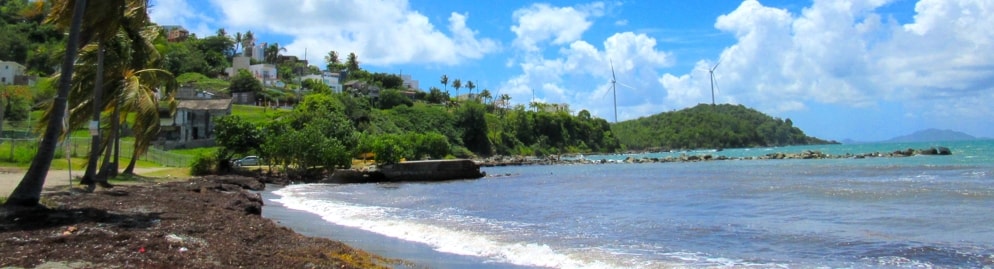
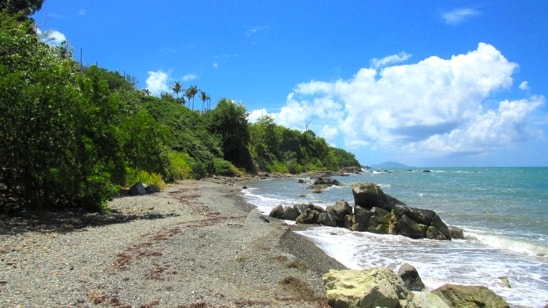
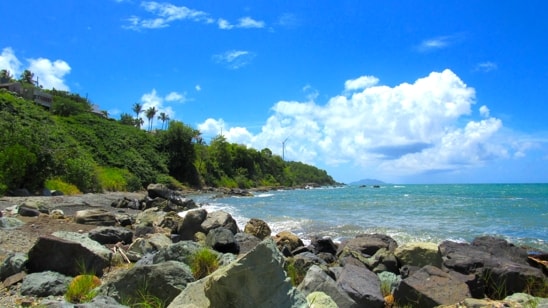
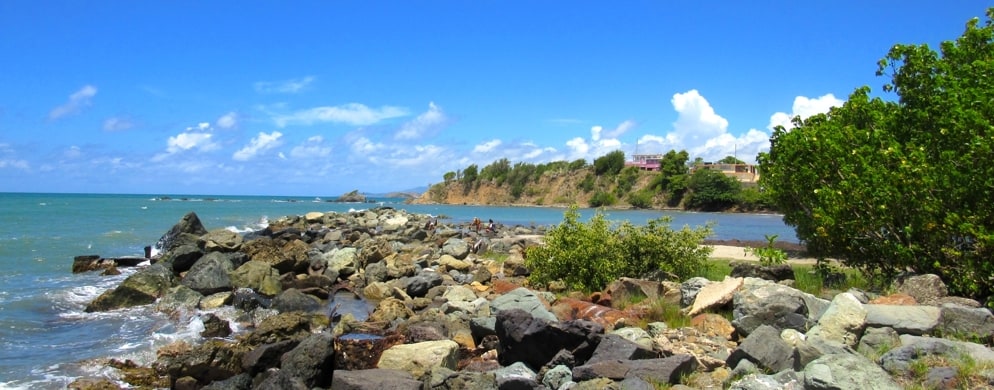
Reached by following some small roads a short distance North of El Malecon, is La Fanduca Beach. A quiet spot in a small bay, the beach here is pebbled in places rather than sandy and is somewhat rocky, but still a beautiful spot.
Playa El Corcho
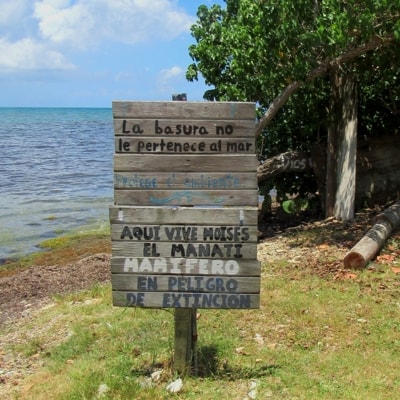
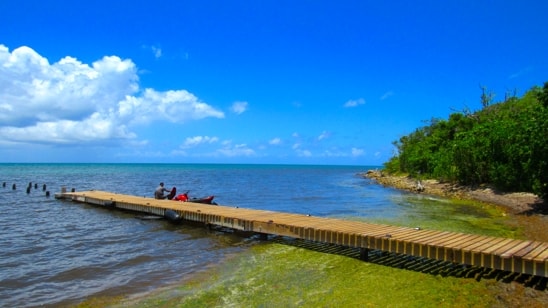
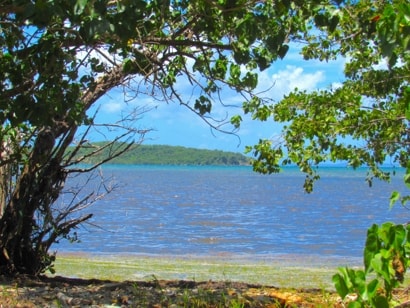
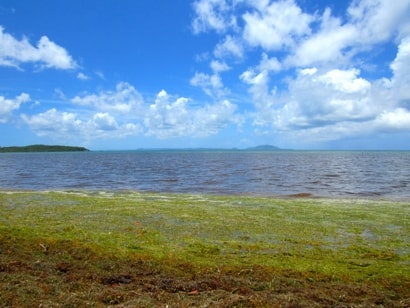
El Corcho Beach is close to Naguabo's northern border with Ceiba, where Río Daguao opens into the sea. Off the main roads, this is a small and secluded beach that looks out towards Vieques.
|
|
|
|
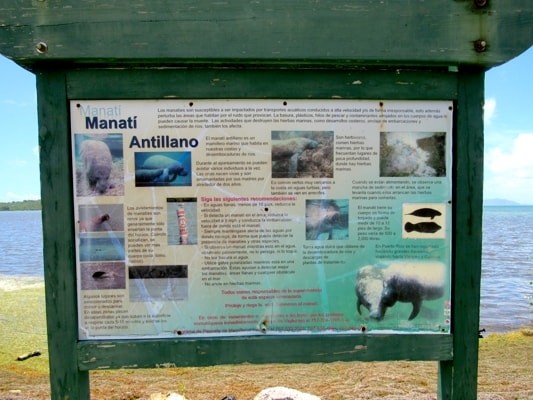
El Corcho is an area where manatís live
|
|
|
|
|
A small pier lets jet skies and small boats operate from the beach
|
|
Looking North from the beach
|
|
|
|
|
Looking northeast with Vieques on the horizon
|
|
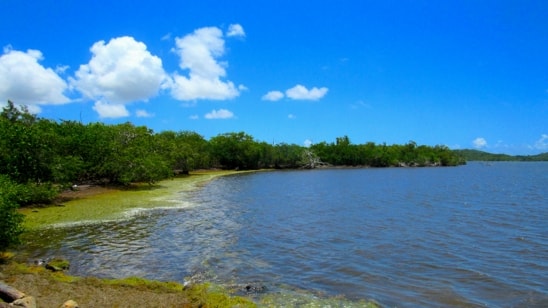
The land curves away from the beach forming a small bay
|
|
Other scenes from around Naguabo
Municipal Theatre
|
|
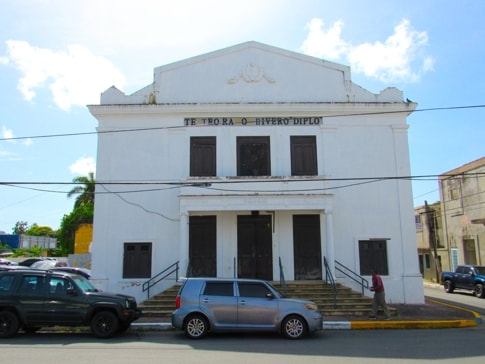
Teatro Ramón Rivero "Diplo"
|
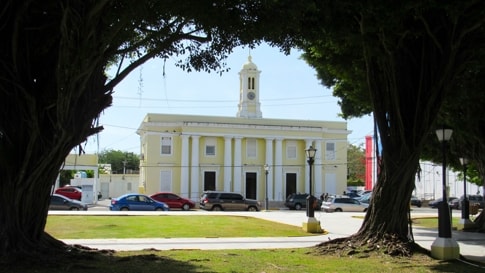
At the southeast corner of the Plaza de Recreo Luis Muñoz Rivera, and close to the Alcaldía, is the Municipal Theatre named after Ramón Rivero "Diplo".
|
|
Bandera de Hector
|
|
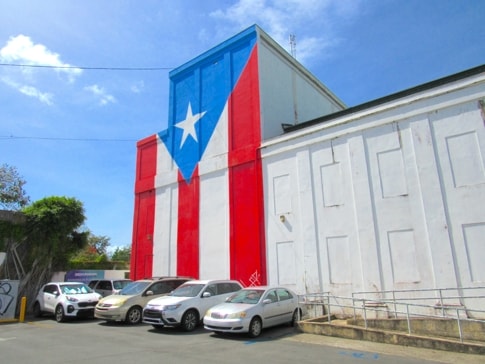
Bandera de Hector
|
Easily seen from the Plaza de Recreo, painted on a side wall of the municpal theatre towards the back, is Naguabo's Bandera de Hector.
|
Pedro Flores
|
|
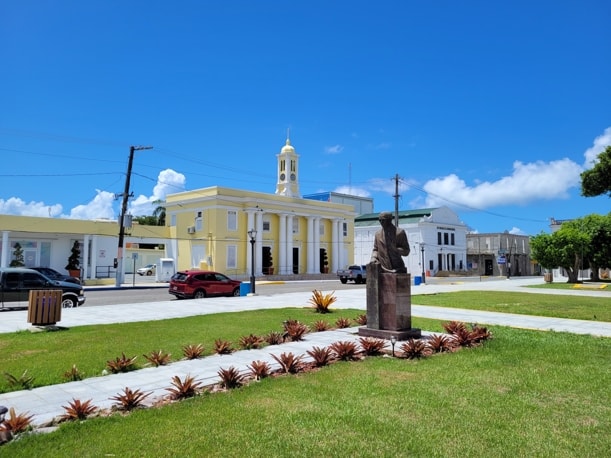
View of statue looking across the Plaza towards the Alcaldía
|
|
|
|
|
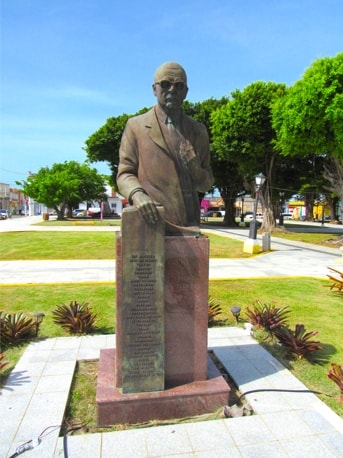
Statue of Pedro Flores
|
|
|
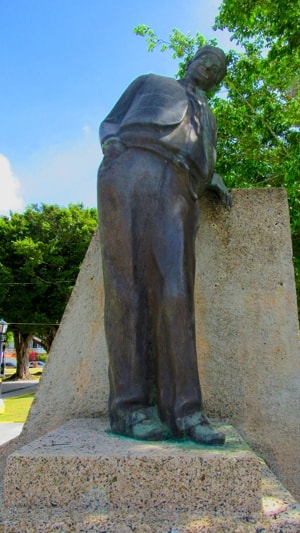
A statue of Pedro Flores sits within the Plaza de Recreo at the northeast corner. Pedro Flores was born in Naguabo in 1894 and is remembered as a musician and one of Puerto Rico's leading composers of balads and boleros. In the statue, Flores is resting his hand on a plaque that lists many of his most famous songs.
|
The Old Cemetery
|
|
Viejo Cementerio de Naguabo
|
|
|
|
|
Main Entrance Gate
|
|
|
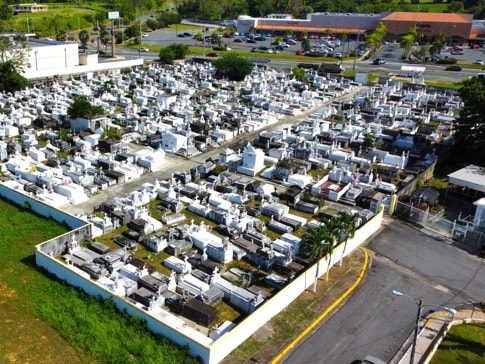
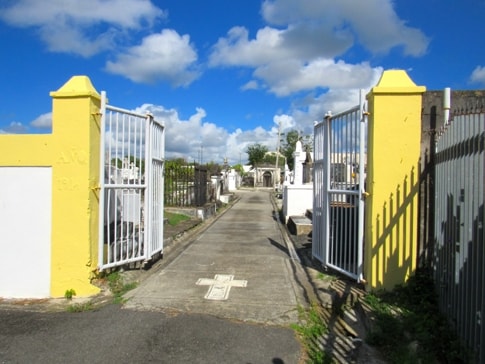
Naguabo's old cemetery lies just West of the downtown area with the main entrance leading directly from Calle Luis Sanchez Rivera. This entrance gate has the date "1914" on one of its pillars, but the cemetery dates from at least 1885 and was originally entered from the opposite side.
|
Ramón Rivero "Diplo"
|
|
|
|
|
View of statue looking into the Plaza from in front of the theatre
|
|
|
|
Plaque on statue of "Diplo"
|
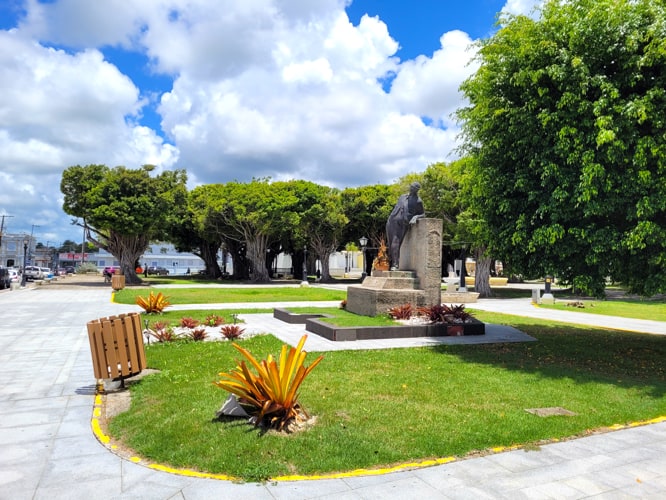
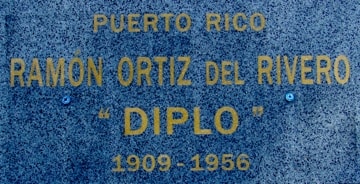
As well as having the Municipal Theatre named after him, Ramon Rivero is also honoured with a statue in the Plaza de Recreo. The statue sits within the Plaza at the southeast corner, immediately in front of the Theatre.
Arturo Ramón Máximo Ortiz del Rivero was born in Naguabo in 1909 and is remembered as a comic actor on stage, radio and TV. He took the stage name Ramón Rivero, and used the nickname "Diplo" after his best known comic character, which he developed while touring theatres throughout Puerto Rico. The statue of Rivero shows him as "Diplo" and manages to capture his comic character in its stance.
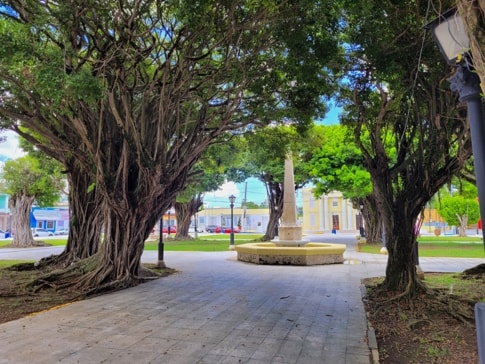
Other views around the Plaza de Recreo
|
|
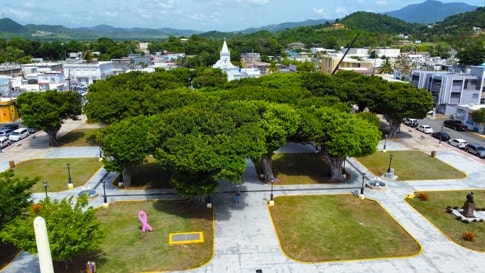
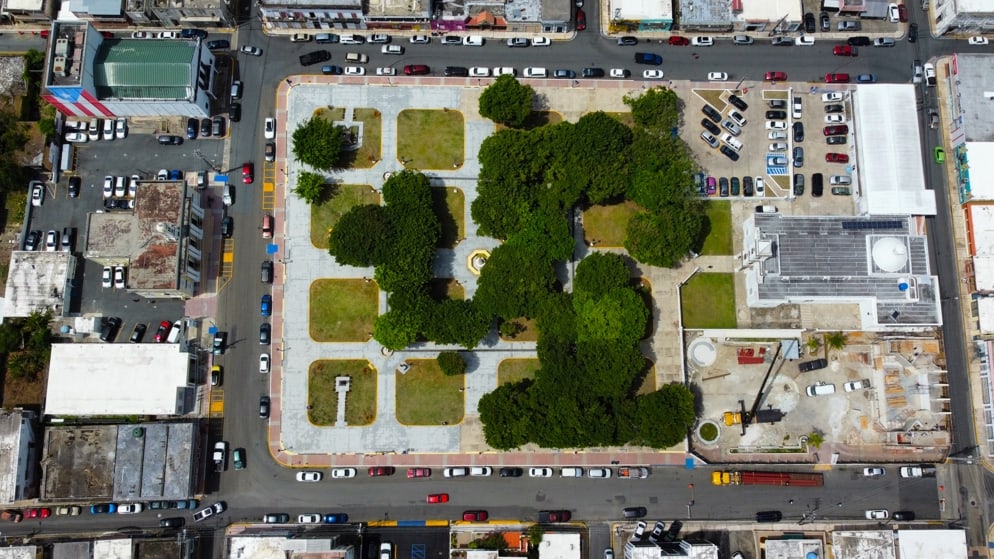
A bird's eye view of Plaza de Recreo Luis Muñoz Rivera
|
|
|
|
|